Hydrotherapy Pool Equipment Checklist for SEN Schools: Everything Beyond the Pool
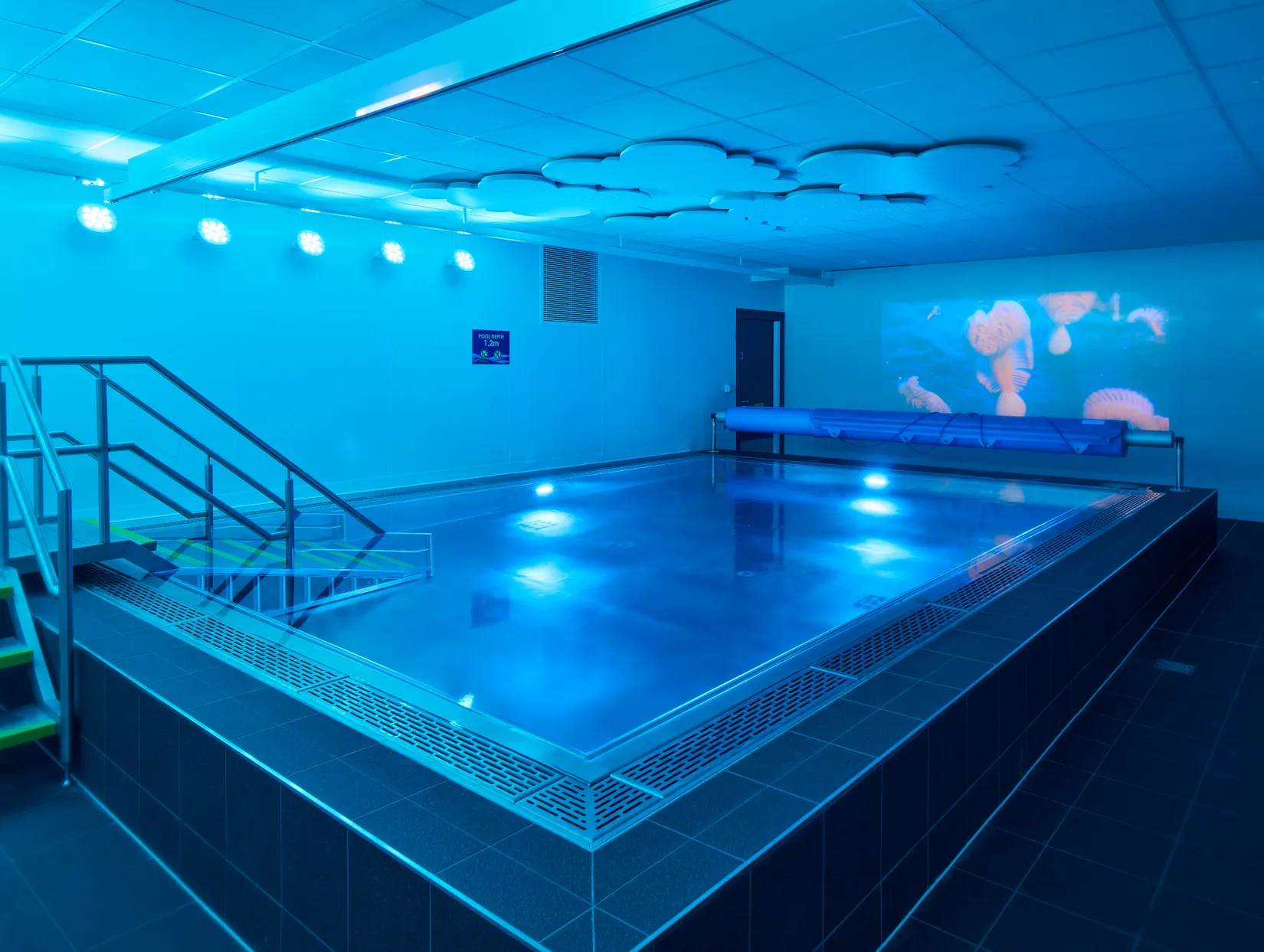
When you’re planning a hydrotherapy pool for an SEN school, it’s easy to focus on the pool itself. But the equipment around it is just as important. Hoists, changing benches, shower equipment, pool access, storage and safety equipment all need to work together if pupils are going to use the facility safely and comfortably.
The best way to plan the equipment is to follow the pupil journey from changing and transferring through to getting into the pool, completing a session, showering and getting changed again. If one part of that journey doesn’t work, it can affect the whole session.
This guide is for head teachers, SENCOs and facilities leads scoping a new or refurbished suite, and for the architects and contractors delivering it. If you are still weighing up pool size, depth and sensory features, start with our overview of hydrotherapy pools for SEN schools, then come back to this checklist.
What equipment does a school hydrotherapy pool need?
A useful starting point is to think about what happens during a typical session. A pupil arrives, gets changed, transfers to the pool, gets into the water, completes their session, then needs to get out, shower and get changed again.
Looking at the whole journey makes it easier to spot where equipment is needed and where the layout could create problems for staff.
The pool may be the biggest item in the room, but it isn’t the only thing that determines how practical the facility will be. Changing space, transfers and storage can all become pinch points if they’re not considered early in the design.
The hydrotherapy pool equipment checklist, stage by stage
Use this table as a working checklist at feasibility and design stage. The right-hand column is the question that most often gets missed.
| Stage | Equipment to plan for | Question to ask at design stage |
|---|---|---|
| Arrival and changing | Height-adjustable changing benches with side rails, privacy screening, lockers or pegs | Can two staff work safely either side of the bench? |
| Transfer | Ceiling track hoist with room coverage, slings suitable for wet use, spare slings | Does the track provide a continuous route from the changing area to the pool? |
| Pool entry and exit | Hoist over the water, steps with handrails, or a poolside or platform lift | Which pupils will use each route, and does the pool edge work for all of them? |
| In the water | Floats, supports, in-water seating and therapy aids chosen by the physiotherapy team | Who owns, cleans and replaces this kit? |
| Showering and drying | Shower trolley or shower chair, thermostatically controlled shower, space to dry and dress | Which pupils will use each route, and does the pool edge work for all of them? |
| Safety throughout | Slip-resistant flooring, grab rails, alarm call points, evacuation equipment, written emergency plan | How would staff recover a pupil from the water in an emergency? |
| Behind the scenes | Filtration, pumps, heating, chemical dosing, environmental control | Is the plant room big enough, ventilated and reachable for servicing? |
| Storage | Ventilated storage for slings, floats, spreader bars and cleaning equipment | Where does every loose item live when the pool is not in use? |
How many hoists does a hydrotherapy suite need?
There isn’t a set number of hoists that every hydrotherapy suite needs. The right arrangement depends on the room layout, the pupils using the pool and how transfers will be carried out.
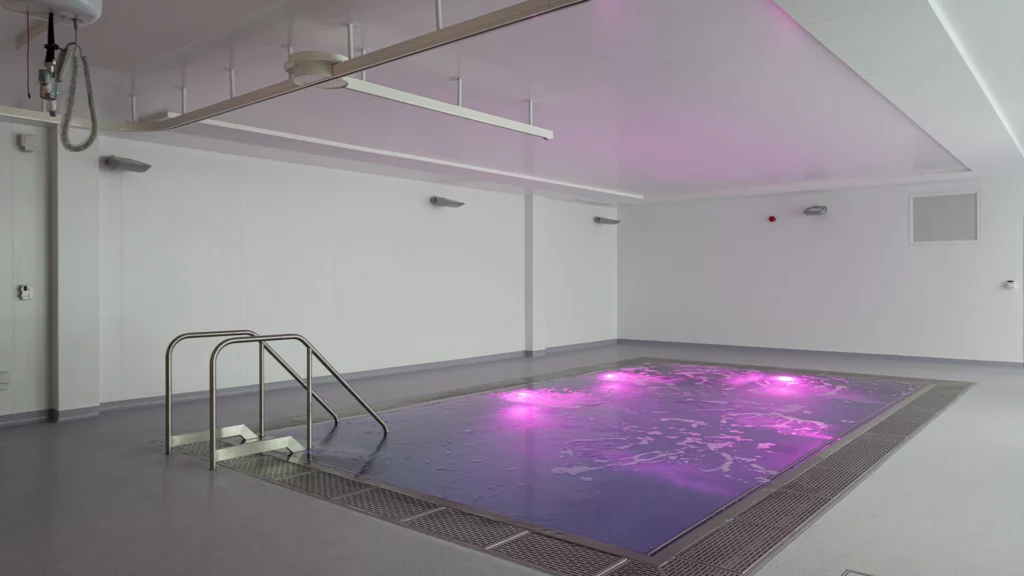
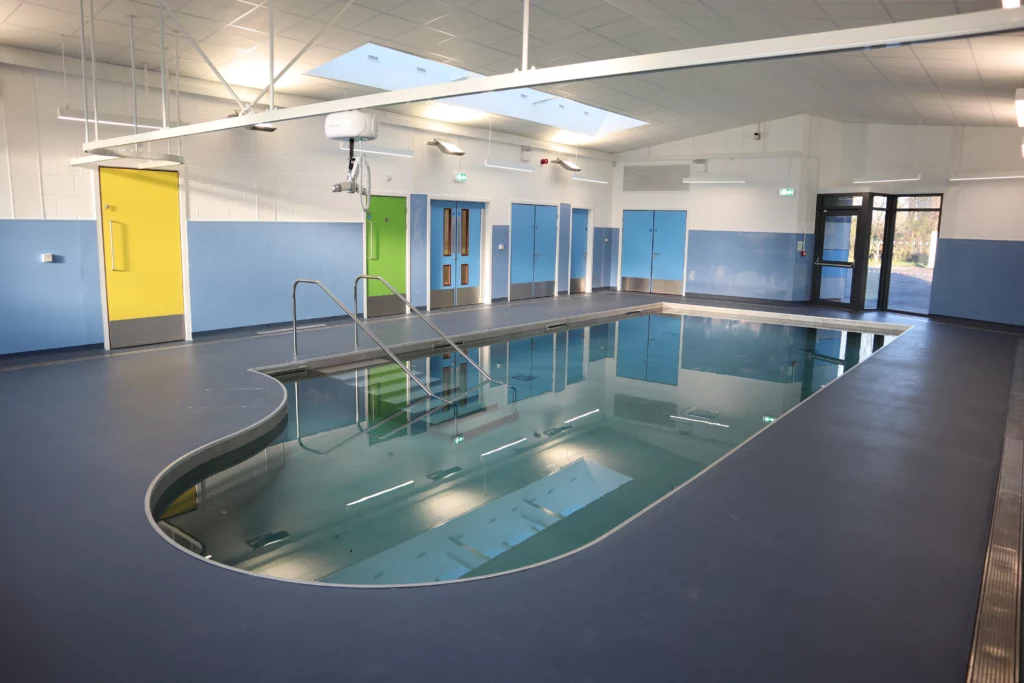
A continuous ceiling hoist system that runs from the changing bench, across the poolside and over the water can allow staff to transfer a pupil without changing hoist systems part-way through the journey. That saves time on every session and removes the riskiest moments, which are usually mid-journey transfers on a wet floor.
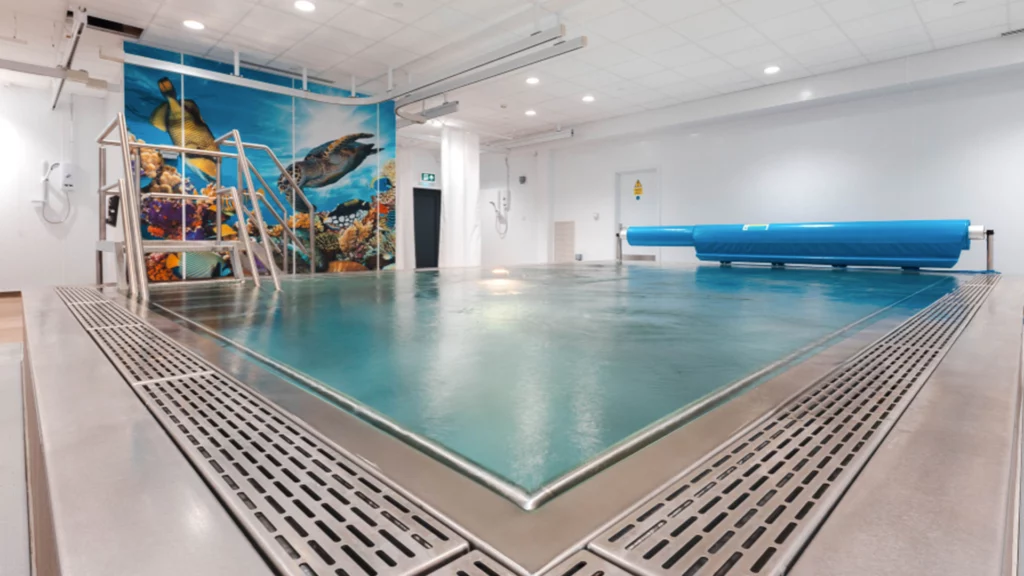
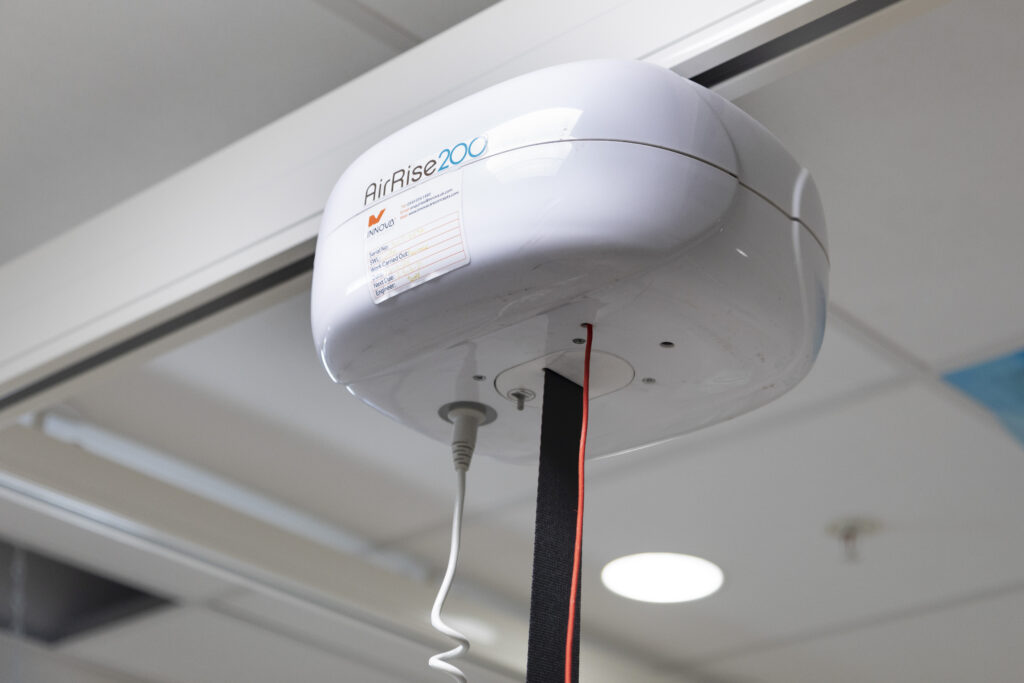
At Summerdown SEN School in Eastbourne, for example, an AirGlide 360 track with an AirRise 200 hoist unit links the hygiene room directly to a 7m x 4m hydrotherapy pool. Where the ceiling structure cannot carry a track, a freestanding or poolside hoist can cover the water transfer, but it will need to be considered as part of the wider poolside layout so there is still enough room for staff to work safely.
What changing and showering equipment is needed?
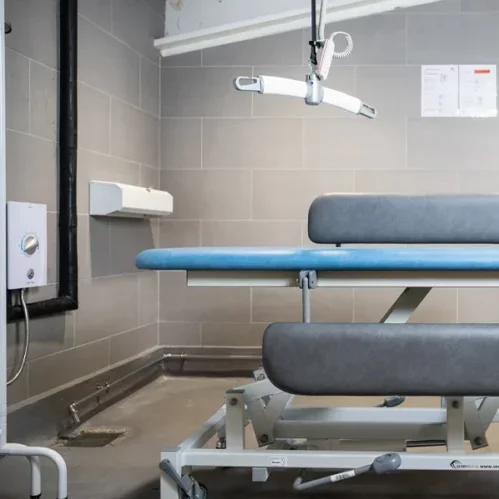
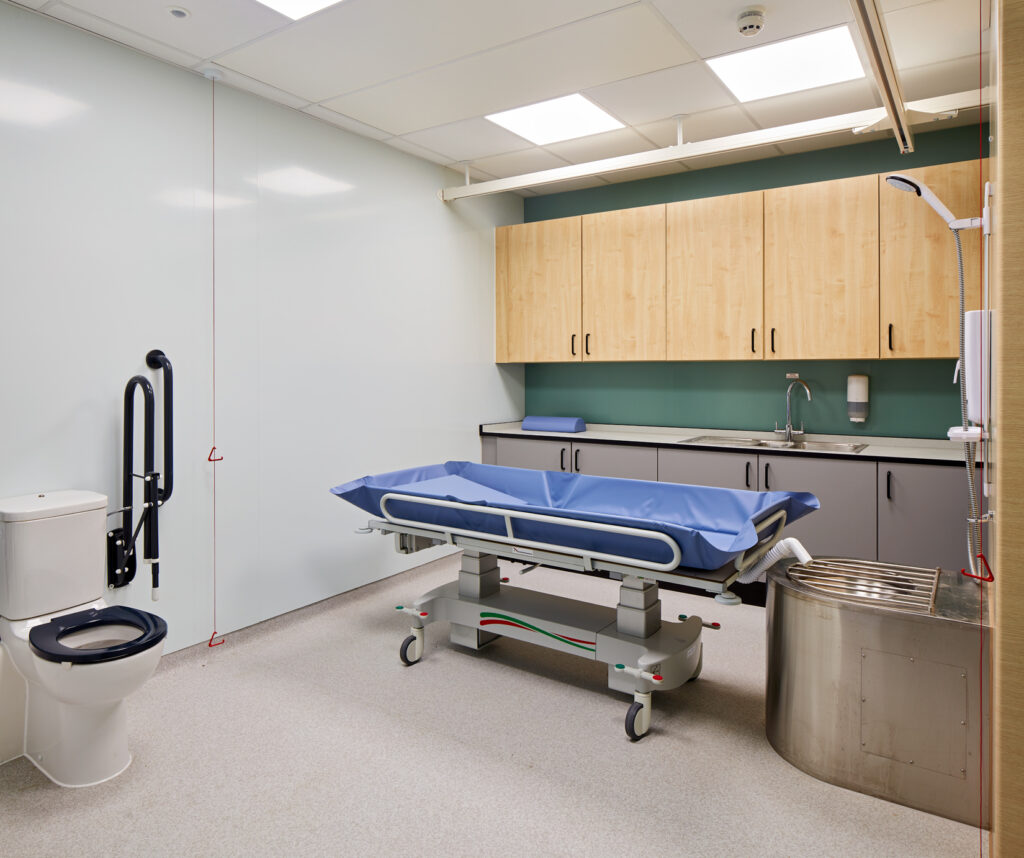
Height-adjustable changing benches let staff work at a safe height, which matters when the same staff may support several pupils in one session. Depending on the needs of the pupils, you may also need a shower trolley or shower chair, particularly where a pupil cannot transfer to a standard shower independently.
Depending on the needs of the pupils, you may also need a shower trolley or shower chair, particularly where a pupil cannot transfer to a standard shower independently.
Many schools treat the changing area as a hygiene room in its own right. An integrated hygiene room designed around the same hoist track can help keep transfers straightforward and make better use of the available space.
What conditions does poolside equipment have to cope with?
A hydrotherapy pool room is warm and humid. The water and air temperatures are typically higher than those found around a conventional swimming pool, so humidity control needs to be considered from the start of the design. Our architect’s guide to hydrotherapy pool room design looks at the environmental requirements in more detail.
It also means equipment in the room needs to be suitable for a warm, humid environment and exposure to pool chemicals. Check the manufacturer’s specification for hoists, motors, changing benches, shower equipment and fixings before they are selected.
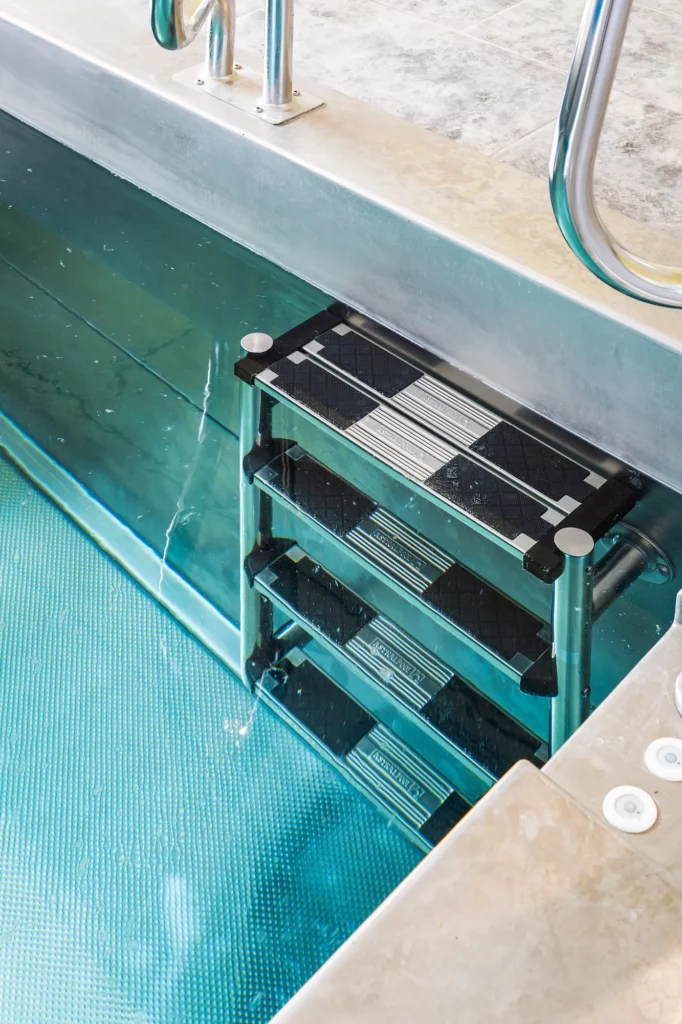
The pool itself needs the same consideration. Amarine-grade stainless steel hydrotherapy pool is one option for schools looking for a durable pool construction, with a smooth surface that avoids the grout maintenance associated with tiled pools.
How does water turnover affect the school timetable?
Filtration and water treatment capacity need to be considered alongside the way the pool will be used. A school running several hydrotherapy sessions each day will have different operational requirements from a facility used less frequently.
Discuss the expected timetable with the pool designer early in the project so the filtration, treatment and plant systems are designed around the intended use of the pool rather than added as an afterthought.
For water quality standards, the PWTAG Code of Practice provides guidance for the management and operation of swimming and spa pools, including aspects of water treatment and quality.
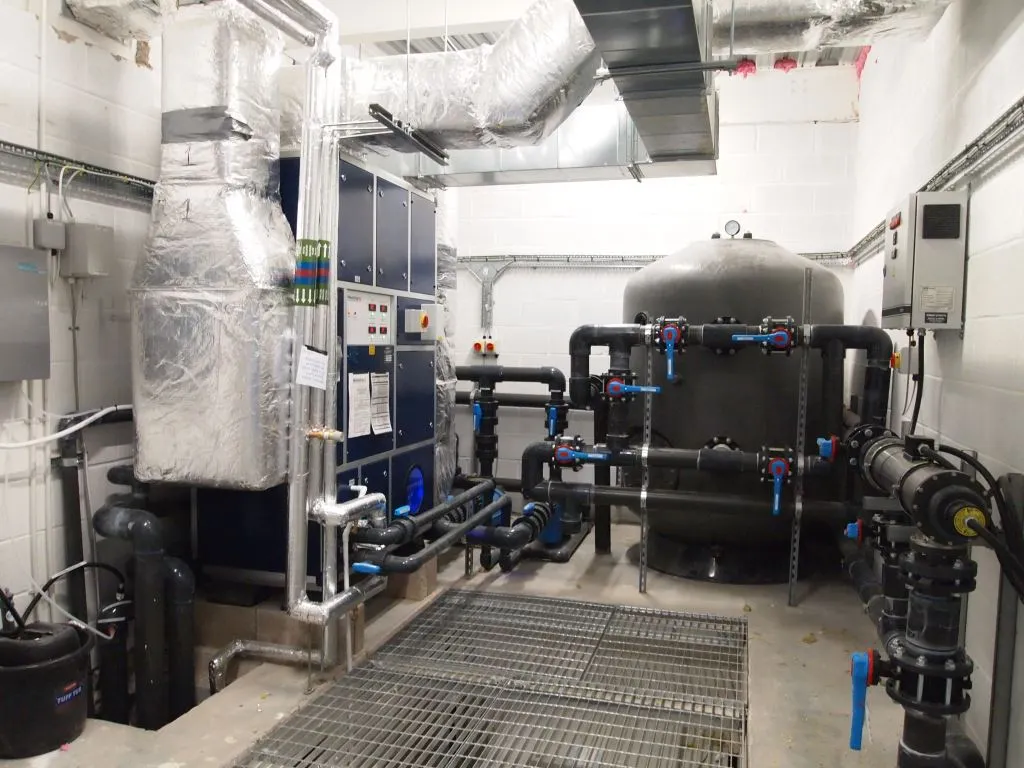
Plant room space is often underestimated: the space required will depend on the pool size and the equipment specified, as well as the access needed for maintenance. Our guide to what is included in a hydrotherapy pool plant system covers the equipment that space has to hold.
What about storage?
Storage is easy to overlook when you’re concentrating on the pool and changing facilities. But all the smaller pieces of equipment still need somewhere to go.
Floats, supports, slings, spreader bars, cleaning equipment and spare towels should have dedicated storage that keeps them dry, clean and out of the way when they’re not being used. Without it, equipment ends up stacked at the poolside, taking up valuable working space and creating avoidable hazards in a wet environment.
Which safety and compliance checks apply?
There are several areas of guidance to consider when specifying and operating a school hydrotherapy suite.
- Lifting equipment. Hoists and slings used to lift people need a thorough examination at least every six months under LOLER, as HSE guidance on lifting people explains. Make sure the inspection and maintenance requirements are included in the ongoing running costs of the facility.
- Pool operation. HSE’s HSG179, Health and safety in swimming pools, is an important reference for anyone responsible for operating and managing a pool, covering areas including normal operating procedures and emergency action plans.
- Space planning. The DfE’s Building Bulletin 104 area guidelines for SEND can help schools and designers consider whether the proposed pool, changing and support spaces are appropriate for the intended use.
A planned servicing and maintenance arrangement covering the hoists, changing equipment and pool plant can also make it easier to keep inspections and servicing organised throughout the year.
How should a school phase and budget a hydrotherapy project?
When you’re putting together the budget, look at the pool and plant, the building works and the specialist equipment as one project rather than treating the equipment as an optional extra.
Schools using capital funding, trust funding or fundraising can sometimes secure the pool first and leave equipment such as hoists and changing benches to a later phase. That can create problems if the building has already been designed without the equipment in mind.
Specifying the whole room up front, even if it is delivered in stages, keeps the design coherent. For example, a ceiling may need additional structural support to accommodate a hoist track, so leaving the hoist until after construction can make the eventual installation more difficult and expensive.
Bring in the physiotherapy and care staff who will run sessions from the earliest sketches. They know the real pupil profile, how many staff each pupil needs in the water, and where transfers and other parts of the current process work well – or don’t.
Why coordinate the whole room through one supplier?
A hydrotherapy suite traditionally involves a pool contractor, a hoist installer, a changing equipment supplier and the main contractor, each with their own drawings, lead times and warranties. That can work, but it also means there are more interfaces to coordinate.
Problems can arise when equipment is designed separately: a hoist track may not reach the pool edge, a changing bench may interfere with the track route, or the plant room may not leave enough access around the equipment for maintenance.
Innova designs, supplies and installs the pool, plant, hoisting and changing equipment as one coordinated package, with one set of drawings, one programme and one point of accountability. For a facilities lead working to a fixed programme on a live school site, having those elements coordinated from the outset can make the project simpler to manage.
The same principle applies to specialist equipment for SEN schools more generally: the equipment needs to work for the pupils and staff using it, but it also needs to work within the building around it.
If you are scoping a new or refurbished suite, book an outline design review with our team. We can work through the equipment schedule with you, including the items your school may be sourcing separately, to help identify any gaps before they become a problem on site.
Frequently asked questions
What equipment does a school hydrotherapy pool need?
Beyond the pool itself, a school hydrotherapy suite will typically need equipment for changing, transfers, pool access, showering and storage. This might include a ceiling or poolside hoist, suitable slings, height-adjustable changing benches, a shower trolley or shower chair, slip-resistant flooring, grab rails, in-water supports, storage and emergency equipment. The plant room will also need the filtration, heating, water treatment and environmental control systems required for the pool.
How warm is a hydrotherapy pool room?
Hydrotherapy pools are generally warmer than standard swimming pools, with the exact water and air temperatures depending on the intended use of the pool and its design. The room therefore needs appropriate environmental control to manage humidity, and equipment should be suitable for the warm, humid conditions found around the pool.
How big is a hydrotherapy pool plant room?
As a guide, allow around 12m² of plant room for a 3.5m x 2.5m pool and about 20m² for a 6m x 4m pool. The space required will depend on the pool dimensions, filtration and water treatment equipment, heating system and other plant specified. It should also provide enough access for engineers to inspect and maintain the equipment.
How often do pool hoists need inspecting?
Hoists and slings used to lift people are subject to LOLER requirements, including thorough examination at least every six months in many lifting-person applications. The exact inspection regime should be confirmed with the competent person responsible for the equipment. Staff should also carry out the manufacturer’s recommended pre-use checks, including visual checks of slings.
Can hoisting, changing and pool equipment come from one supplier?
Yes. Innova designs, supplies and installs hydrotherapy pools, plant, ceiling hoists and changing equipment as one coordinated package. Using one supplier means one set of drawings and one programme, which reduces clashes such as hoist tracks stopping short of the pool edge or benches blocking the track route.

Speak to The Experts
Need assistance with product enquiries, general enquiries, or product support? Our phonelines are open 9am - 5pm Monday to Friday. Or, fill out the form for a call back.