Single Supplier vs Multiple Specialist Suppliers on NHP Schemes: The Real Cost of Splitting Hoists, Hygiene Rooms and Changing Places

In the single supplier vs multiple specialist suppliers decision, the equipment price is rarely where the difference lies. On New Hospital Programme schemes, the real cost of splitting ceiling hoists, hygiene rooms and Changing Places across vendors sits in the interfaces: late design clashes, extra site visits, sequencing delays, disputed defects and several servicing contracts running for decades.
For a capital project team, the question is therefore not simply which option has the lowest equipment price. It is which approach gives the most predictable cost and delivery process from design through to handover and ongoing maintenance.
This article is for trust capital project directors and quantity surveyors building NHP budgets. It sets out where multi-vendor packages can create additional costs, how to compare options on a like-for-like basis, what to allow for Changing Places, and how the decision carries through into revenue costs after handover.
Where does money leak on multi-vendor equipment packages?
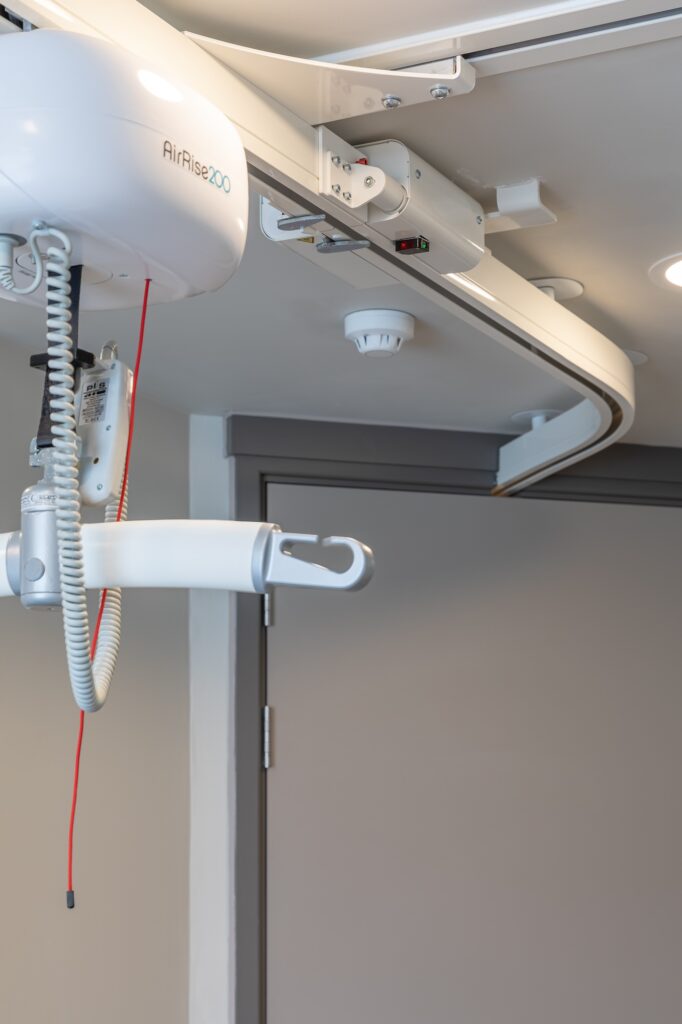
When hoists come from one vendor, the changing bench from another, sanitaryware from a third and the shower trolley from a fourth, each supplier is responsible for its own part of the installation. The challenge is making sure those individual packages work together.
The structural engineer receives loading data at different times. Drainage gets fixed around a toilet position before the hoist track layout is signed off. If those decisions then need to change, the project has to absorb the resulting design time, rework or programme impact.
The usual leakage points are:
- Abortive design work when track routes, bulkheads, services and ceiling voids clash late in technical design.
- Duplicated surveys, method statements and site visits from several installers attending the same room.
- Programme float used up by sequencing installations that cannot run in parallel.
- Rooms that cannot be signed off because one component arrives outside the agreed window.
- Defects that sit between two suppliers’ scopes, where liability is disputed rather than resolved.
None of these appear as a line in the equipment schedule, which is why a price-only comparison can make a split package look cheaper than it is once the wider project costs are taken into account.
How do you compare single supplier vs multiple specialist suppliers on a like-for-like basis?
The simplest way is to compare the coordination involved as well as the equipment itself.
Compare coordination load, not just equipment price. The table below uses a simple example: one hospital block containing ceiling hoists across inpatient rooms, several assisted hygiene rooms and one Changing Places toilet, procured either as three packages or as one.
| Cost driver | Three specialist suppliers | One coordinated supplier |
|---|---|---|
| Supply contracts to procure, administer and close out | 3 | 1 |
| Supplier-to-supplier design interfaces to coordinate | 3 | 0 |
| Sets of loading data, drawings and technical submittals | 3 | 1 |
| Installation programmes to sequence with the main contractor | 3 | 1 |
| Commissioning and handover documentation sets | 3 | 1 |
| Warranty positions when a fault crosses scopes | Split between suppliers | Single |
| Servicing and LOLER contracts after handover | Up to 3 | 1 |
Each row has a potential cost attached to it: contract administration hours, design team time, programme risk or estates management effort. A quantity surveyor can price them from the project’s own rates, which gives a more complete comparison than unit prices alone.
Where a supplier can only quote part of the scope, the gap should be priced as a risk allowance rather than assumed to be zero.

Does a single supplier reduce choice or force compromise on specification?
Only if the supplier’s range is narrow. Consolidation works when one supplier covers ceiling hoist systems from standard to bariatric capacity, an integrated hygiene room solution and Changing Places toilets, so clinical teams still specify according to the needs of the project. The consolidation happens at the contract layer, not the clinical one.
To protect value, write the specification around performance, coverage and safe working loads rather than named products. That keeps the package competitive under framework rules while still letting it be awarded as one.
What does consolidation look like at hospital scale?
At Midland Metropolitan University Hospital, Innova designed and installed 353 ceiling track hoists with curtain hoppers across single rooms and four and six bed bays. At that scale, every duplicated survey, drawing revision or site visit is multiplied across a large number of rooms, making coordination particularly important.
The NHP makes this more relevant, not less. The National Audit Office’s January 2026 update confirms that NHP hospitals will be built to a standard design with schemes coordinated centrally. Where room types and equipment requirements are repeated across a scheme, there is also an opportunity to standardise the way specialist equipment is specified, installed and maintained.
Our articles on why consolidating specialist equipment packages simplifies complex care projects and how coordinated packages reduce risk in healthcare refurbishments cover the delivery side in more detail.

How should Changing Places be priced in New Hospital Programme budget planning?
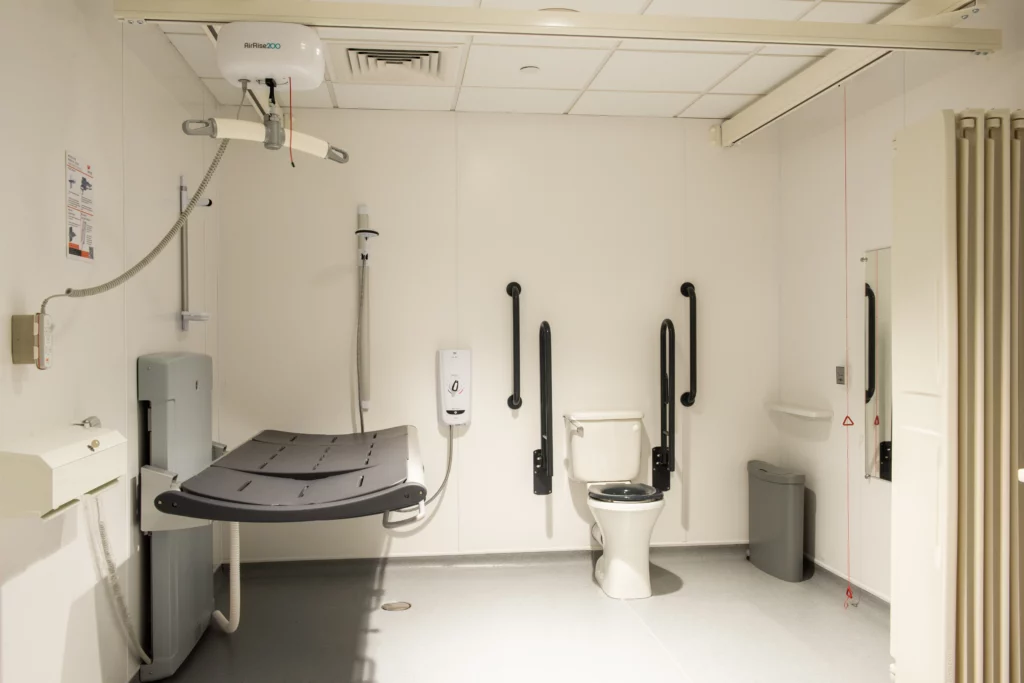
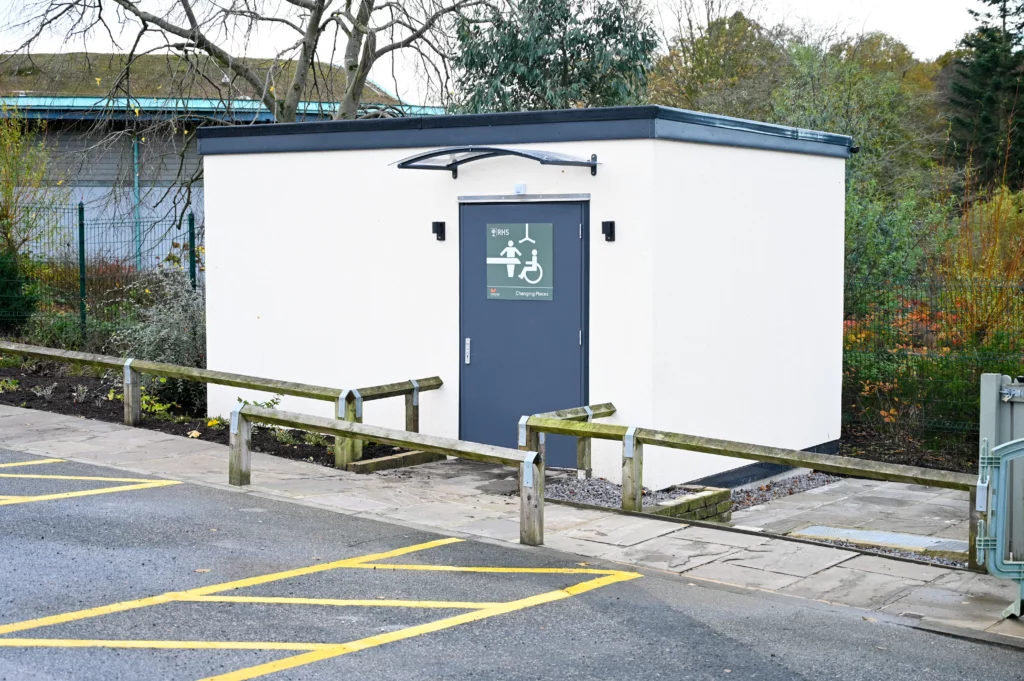
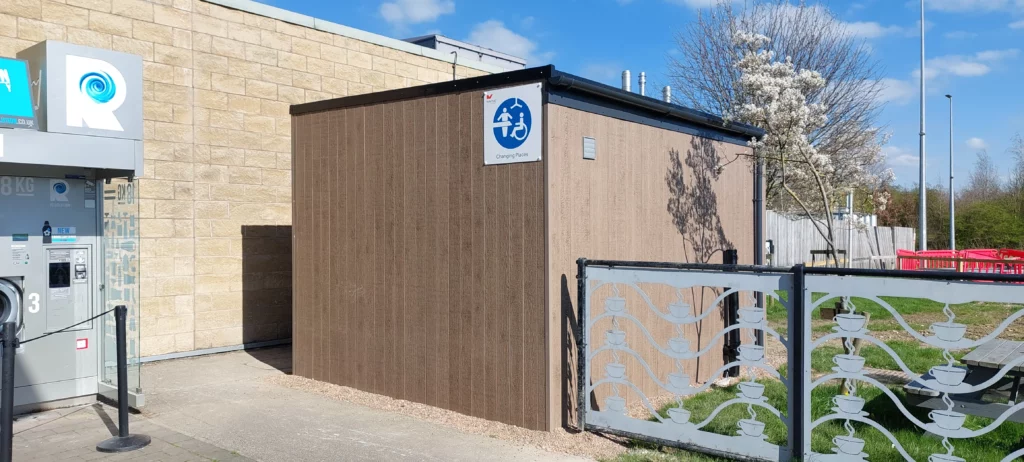
Changing Places toilets are often under-budgeted because teams price the equipment and not the room. Since 1 January 2021, the amendments to Approved Document M have expected at least one Changing Places toilet in new hospitals and primary care centres in England, with layout and equipment guidance referenced to BS 8300-2:2018.
As a benchmark, a Changing Places facility typically costs £26,000 to £41,000 installed, plus VAT, covering the equipment package and enabling works. The final cost will depend on the building, specification and how the enabling works are allocated between the specialist package and main contract.
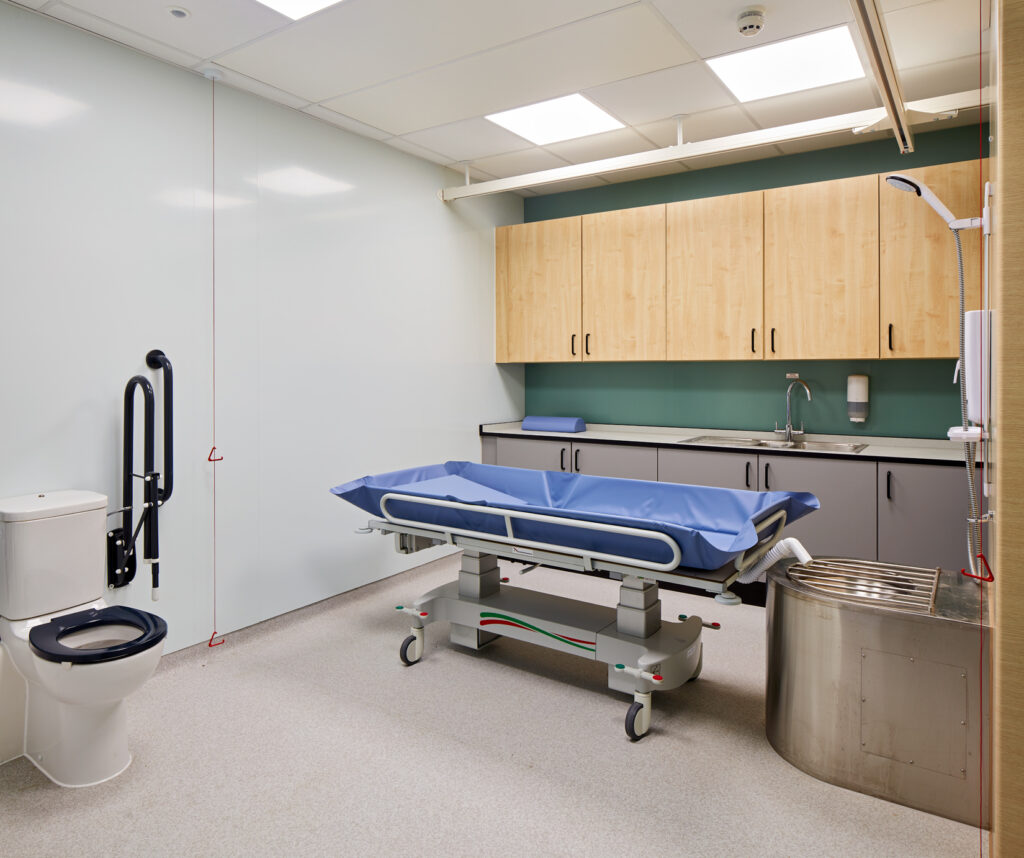
The room itself drives much of that: a minimum 3m x 4m space with a ceiling track hoist, height-adjustable changing bench, peninsular toilet with clearance either side and a height-adjustable basin. On a new build some enabling works fall within the main contract, so budget the equipment package and the room requirements separately to avoid double counting.
Demand supports generous provision. The Changing Places Consortium reported 2,644 registered facilities across the UK at the end of 2025, against an estimated 250,000 people who need them. Our article on why hospitals need Changing Places sets out the case in more detail.
What does consolidation do to lifetime and revenue costs?
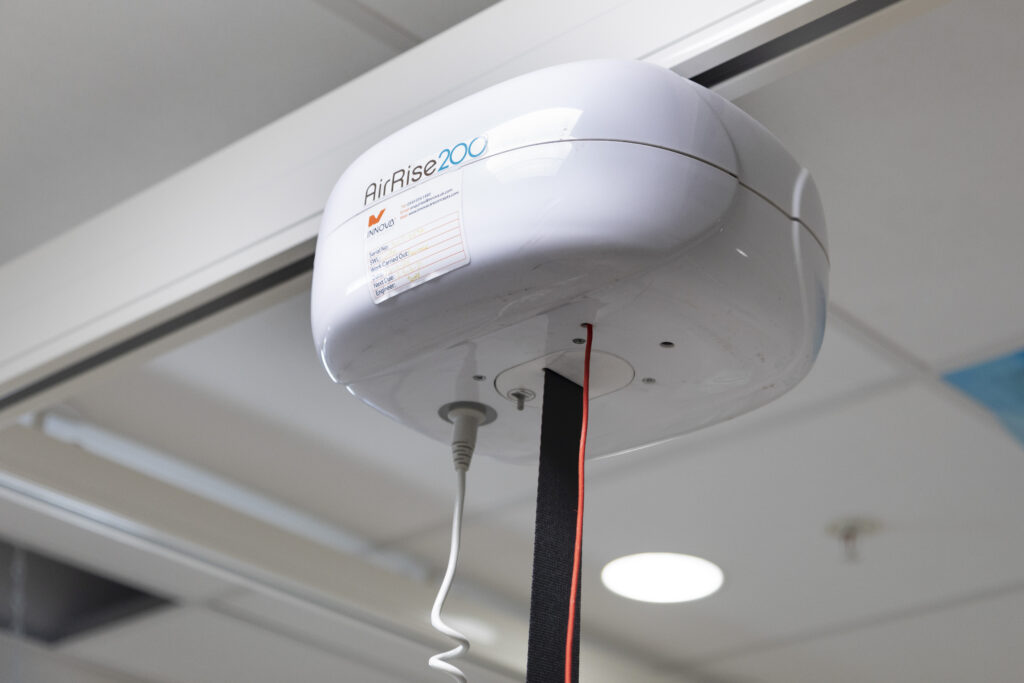
Capital teams hand buildings over, but the trust carries the servicing liability. Under LOLER 1998, Regulation 9, lifting equipment for lifting people and lifting accessories such as slings must be thoroughly examined at least every six months, or in line with an examination scheme. Every ceiling hoist, including those in hygiene rooms and Changing Places toilets, falls into that cycle.
The scale adds up quickly. A hospital with 353 hoists needs at least 706 thorough examinations a year before slings are counted. Split across several suppliers, that means several contracts, certificate formats, renewal dates and engineer visits to the same ward.
Under one servicing and maintenance programme, visits can be batched by department to reduce clinical disruption, and compliance evidence can be managed in one place. A consolidated approach can also give estates teams one contract and one point of contact for planned servicing and maintenance.
For scale, a basic service plan including six-monthly LOLER testing for a single Changing Places hoist starts from around £250 a year.
When should the equipment supplier be involved?
Ideally, before ceiling voids, structural loadings and drainage positions are frozen. Early involvement gives the design team an opportunity to resolve equipment requirements while changes are still relatively straightforward to make.
It also gives the quantity surveyor a single, coordinated cost plan to work from at a stage when changes are generally less disruptive and expensive.
If you are building a cost plan for an NHP scheme, send us your room schedule for a coordinated budget estimate. We will return one priced package for hoisting, hygiene rooms and Changing Places, with the servicing cost alongside, so you can compare it directly with split quotations.
It is how we approach specialist equipment for healthcare environments across every scheme.
Frequently asked questions
Is a single supplier cheaper than multiple specialist suppliers for hospital equipment?
Not always on unit price, but the overall cost can be lower when design interfaces, contract administration, installation sequencing, warranty management and servicing are taken into account. The fairest comparison prices those coordination costs alongside the equipment schedule rather than comparing equipment prices alone.
How much should an NHP scheme budget for a Changing Places toilet?
As a benchmark, a Changing Places facility typically costs £26,000 to £41,000 installed, plus VAT, covering equipment and enabling works. On a new-build hospital some enabling works sit in the main contract, so budget the equipment package and the minimum 3m x 4m room requirements separately to avoid double counting.
Do new hospitals have to include a Changing Places toilet?
In England, amendments to Approved Document M that took effect on 1 January 2021 provide for at least one Changing Places toilet in new hospitals and primary care centres. Layout and equipment guidance is referenced to BS 8300-2:2018 and the Changing Places Consortium.
How often do hospital hoists need a LOLER examination?
Under LOLER Regulation 9, lifting equipment for lifting people and accessories such as slings need a thorough examination at least every six months, or in line with an examination scheme. That includes hoists in hygiene rooms and Changing Places toilets, so a large hospital can need hundreds of examinations a year.
Does using one supplier limit specification choice?
Only if the supplier’s range is narrow. Where one supplier covers ceiling hoists, hygiene rooms and Changing Places, clinical teams still specify on merit. Writing the specification around performance and safe working loads keeps the package competitive under framework rules while allowing it to be awarded as one.


Speak to The Experts
Need assistance with product enquiries, general enquiries, or product support? Our phonelines are open 9am - 5pm Monday to Friday. Or, fill out the form for a call back.