Specialist Public Space Environments

We support contractors, architects, and local authorities to deliver inclusive public environments by integrating Changing Places facilities and specialist accessibility systems into one coordinated solution, reducing risk, ensuring compliance, and improving usability for all.

The Challenge

Delivering Inclusive Public Spaces Without Coordination Risk

Public environments must meet growing expectations around accessibility, compliance, and user experience. From leisure centres and transport hubs to retail and community spaces, facilities need to support a wide range of users, including those with complex needs.

For project teams, this often involves delivering Changing Places facilities alongside other specialist systems such as hoisting and hygiene equipment, all within constrained layouts and live project environments.

Managing multiple suppliers and interpreting evolving accessibility guidance can create coordination challenges, increase risk during delivery, and impact programme certainty.
The Solution

A Coordinated Approach to Accessible Public Environments

We simplify public space projects by delivering Changing Places facilities and associated specialist systems as one coordinated solution.

By consolidating multiple elements under a single provider, we reduce complexity across design, specification, and installation. This ensures accessibility systems are not treated as standalone additions, but as fully integrated parts of the wider environment.

Our approach provides confidence that facilities meet required standards, function effectively in practice, and are delivered efficiently within contractor-led programmes.
01

Changing Places Expertise

Specialist knowledge in delivering compliant Changing Places facilities within public environments.

02

Integrated Accessibility Solutions

Hoisting, hygiene, and accessibility systems designed to work together seamlessly.

03

Reduced Project Complexity

Single point of responsibility across multiple specialist elements.

04

Efficient, Programme-Aligned Delivery

Installation structured to minimise disruption and support project timelines.

How We Work

A Structured Approach to Public Space Delivery

We support contractors and design teams with a coordinated approach that ensures accessibility systems are delivered efficiently, compliantly, and in line with project requirements.

Understand

We assess project requirements, user needs, and compliance standards to define the correct approach from the outset.

Design

We develop coordinated layouts and technical specifications to ensure accessibility systems integrate within the wider scheme.

Deliver

Our teams install efficiently within new-build or live environments, aligned with project programmes and site constraints.

Support

We provide ongoing servicing and maintenance to ensure facilities remain safe, compliant, and operational long-term.

Specifier Support

Accessibility & Changing Places Design Support

We provide architects, consultants, and contractors with the technical resources and design support required to confidently deliver accessible public environments. Our approach ensures compliance, coordination, and practical usability from concept through to completion.
Download

BIM & Revit Files

Detailed models to support coordinated design and integration within wider project schemes.

Link

NBS Specifications

Pre-written clauses to simplify specification and ensure consistency across project documentation.

Download

Technical Datasheets

Comprehensive product information to support informed decision-making and compliance.

Contact

Layout & Design Support

Guidance on space planning, system integration, and practical usability.

Link

CPD Sessions

Educational sessions focused on accessibility, inclusive design, and Changing Places delivery.

Common Questions

Planning Accessible Public Spaces

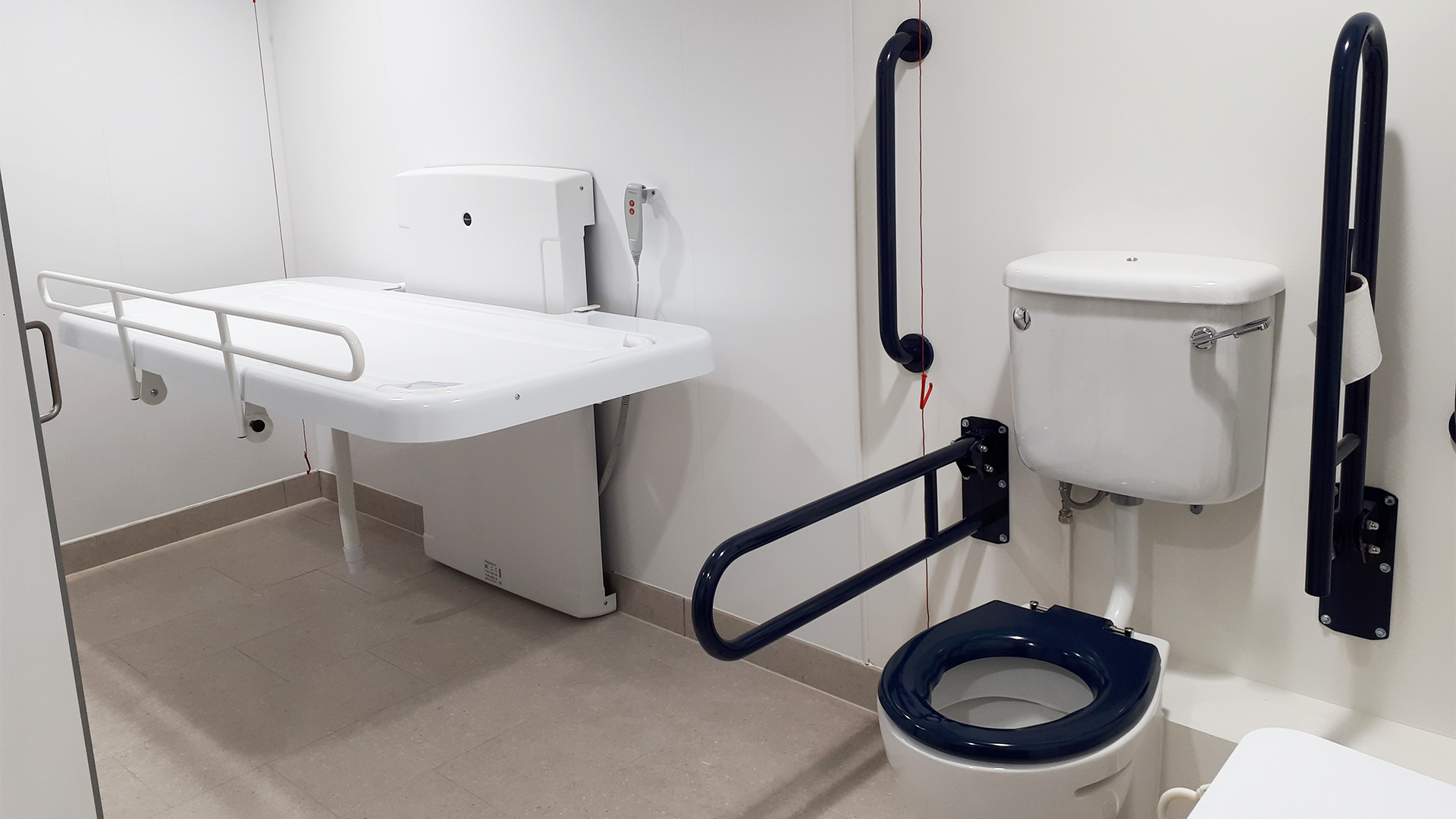
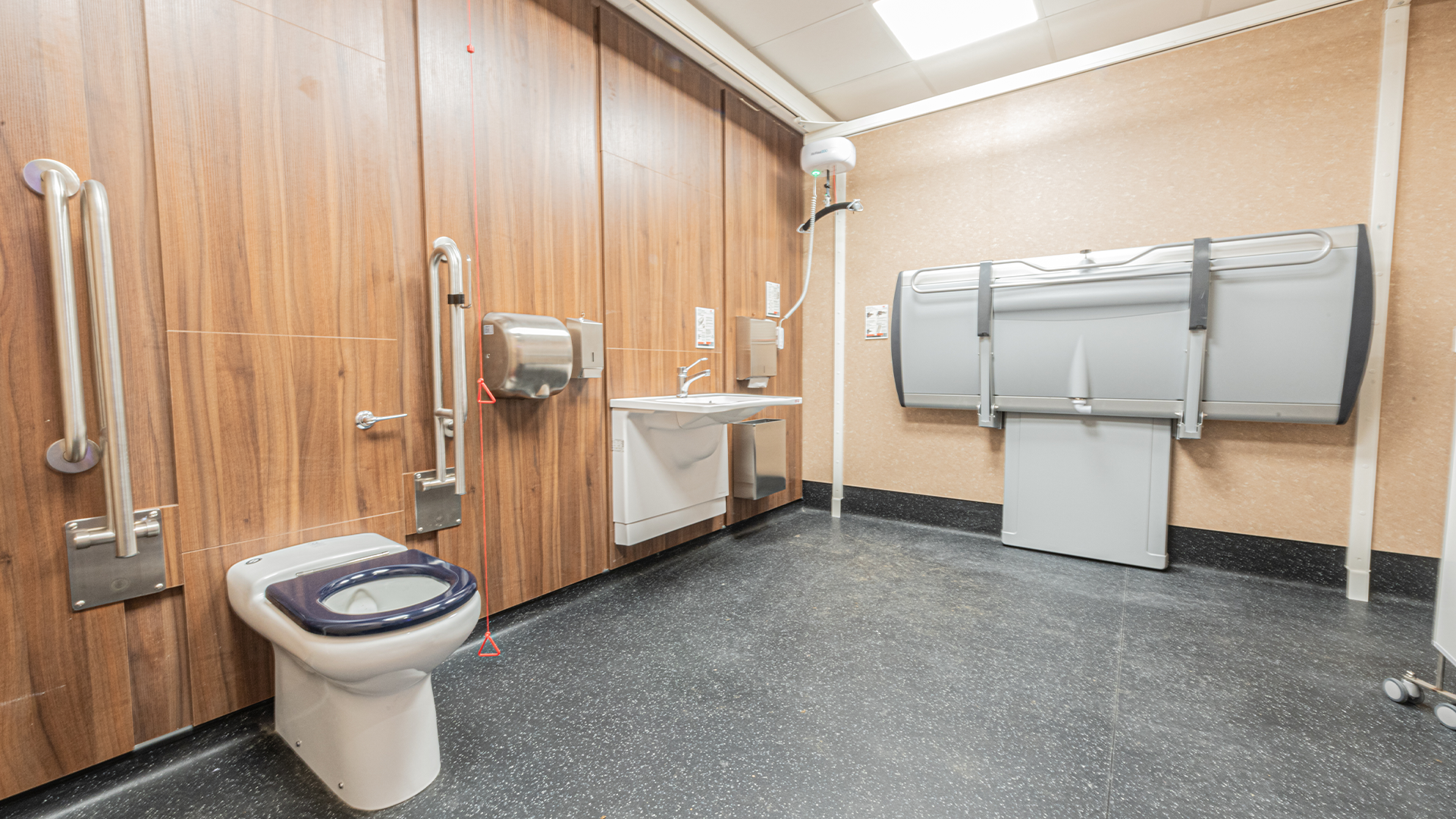
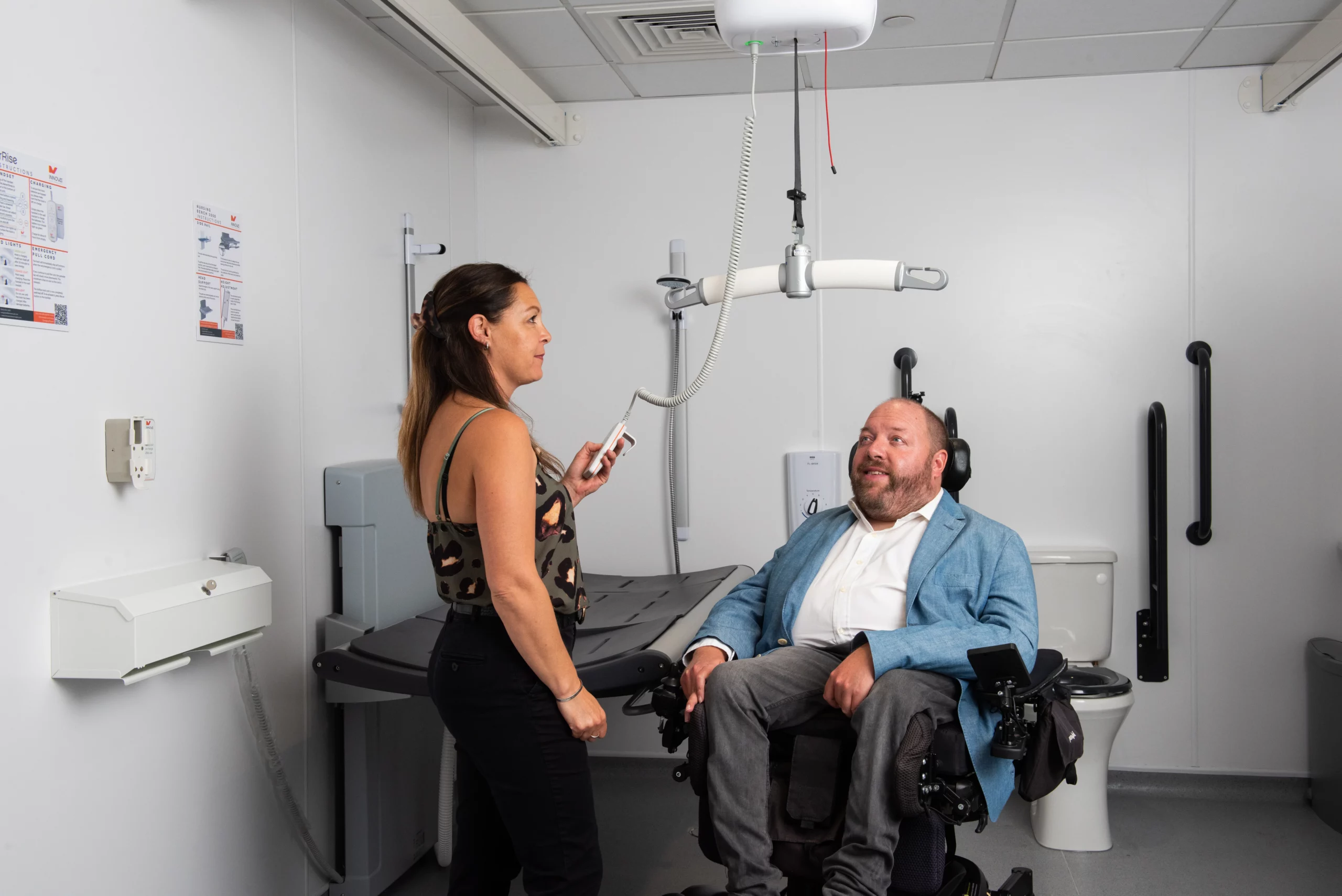
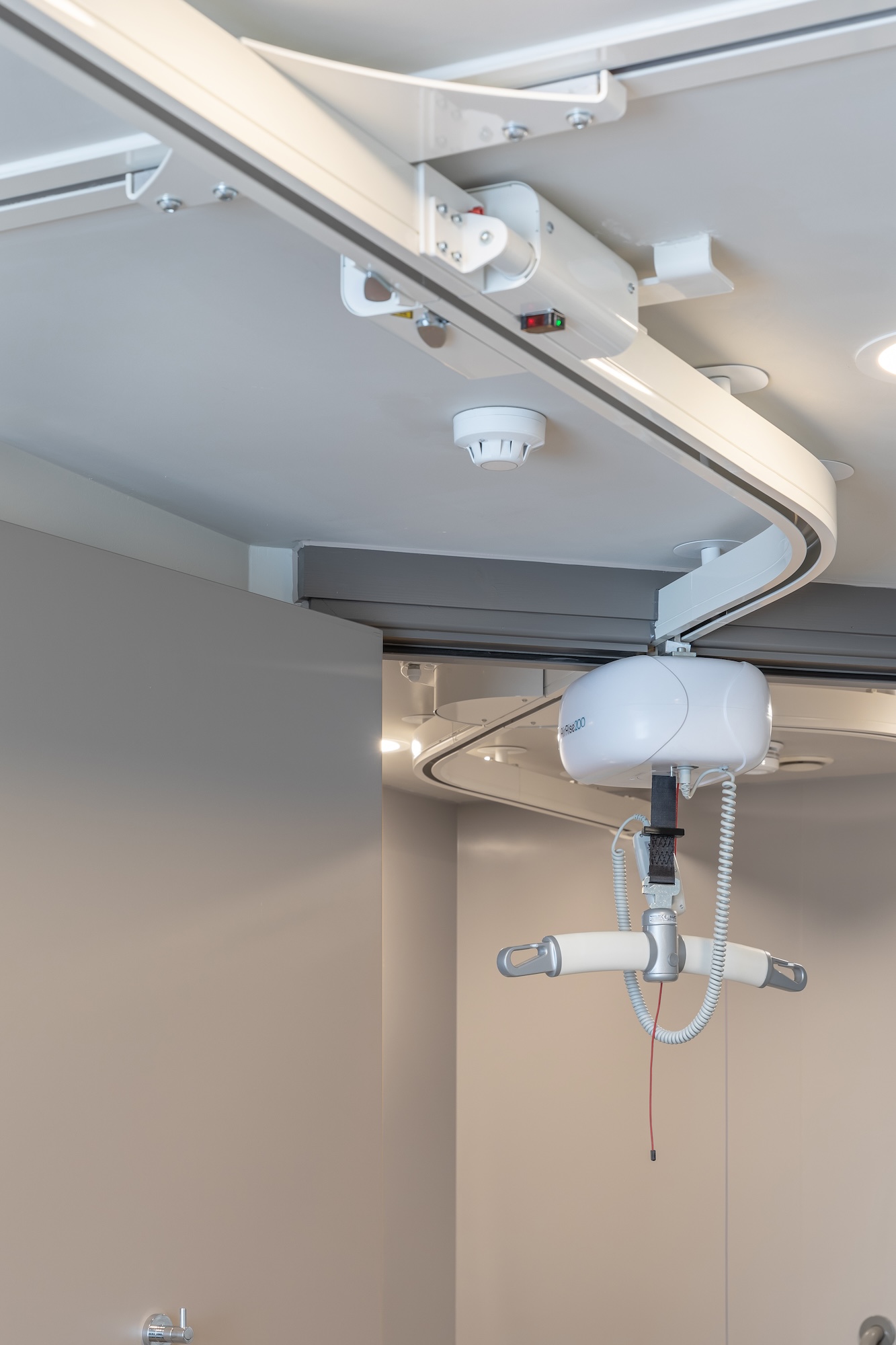
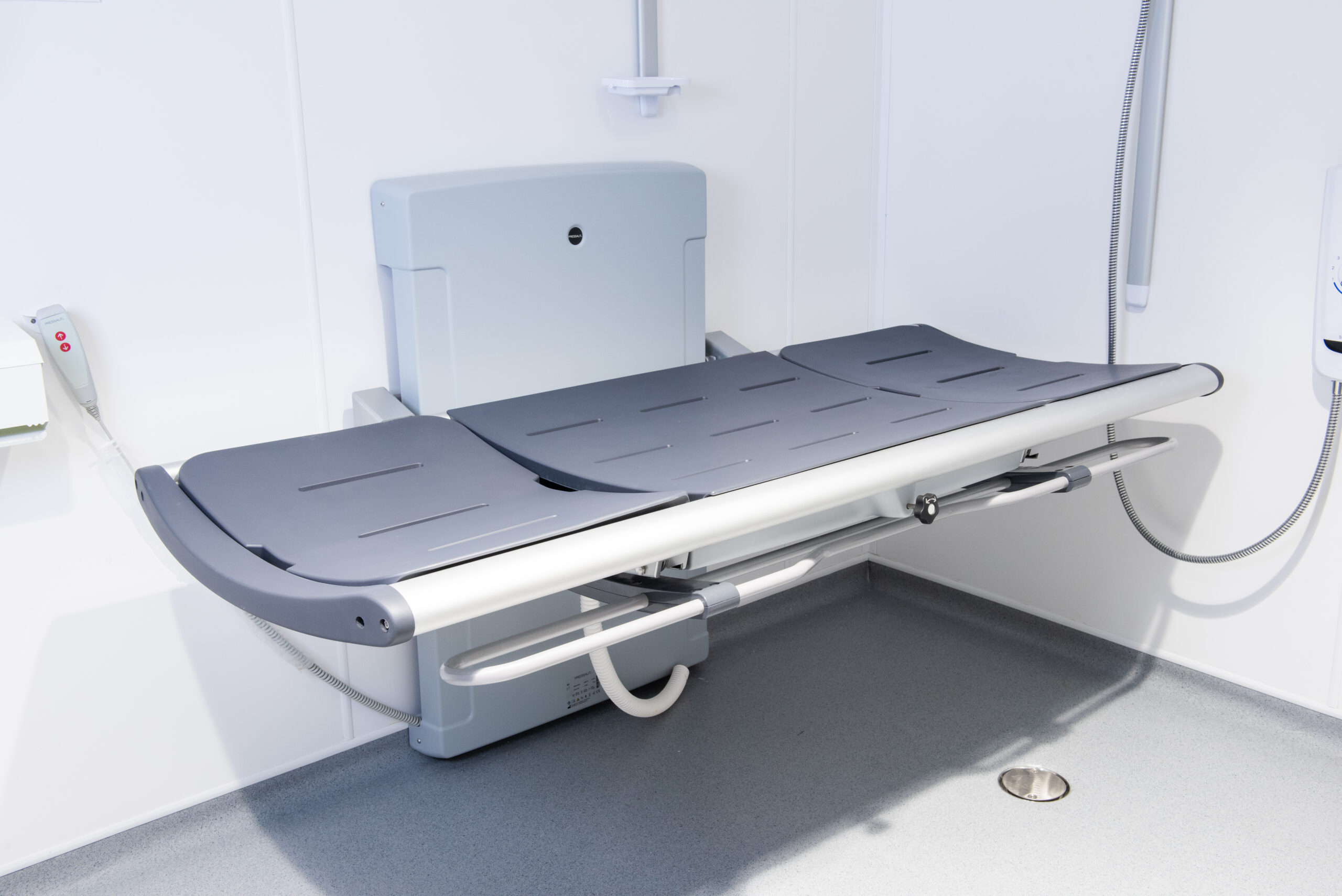
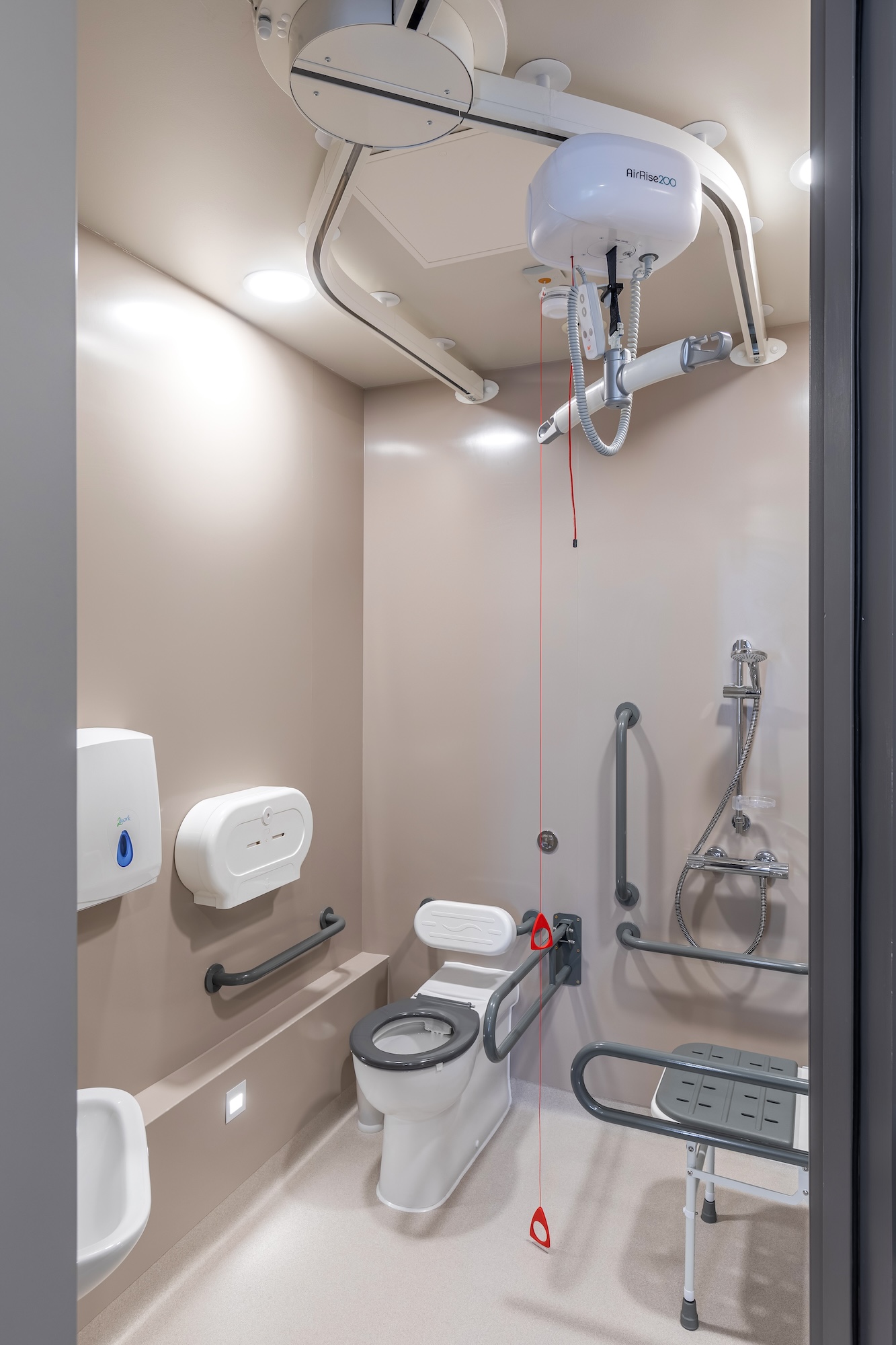
A Changing Places facility is a fully accessible toilet designed for people with complex needs who cannot use standard accessible toilets. It includes a ceiling hoist, height-adjustable changing bench, additional space for carers, and specialist hygiene equipment to support safe and dignified use.
A compliant Changing Places facility must include specific equipment such as a ceiling hoist, changing bench, peninsular WC, washbasin, and sufficient circulation space. Layout, room size, and equipment positioning must follow current Changing Places guidance and accessibility standards.
Changing Places toilets are required in certain new public buildings in England where the building size and use meet defined thresholds in Building Regulations Approved Document M. These typically include large buildings such as: Shopping centres with a gross floor area of 30,000 m² or more Assembly and recreation buildings such as arenas, stadiums, and leisure centres with a capacity of 350 people or more Hospitals and major transport interchanges In addition to national regulations, many local authorities require Changing Places provision through planning conditions on smaller developments.
Public buildings must typically comply with Building Regulations Part M, BS 8300 guidance, and inclusive design best practices. Where Changing Places facilities are included, they must also meet specific layout and equipment guidance to ensure full compliance.
A compliant layout requires careful planning of space, equipment positioning, and circulation areas. Early design input is critical to ensure the room size, door access, hoist coverage, and equipment placement meet guidance and function effectively in practice.
Yes, existing buildings can be adapted to include Changing Places facilities. However, feasibility depends on available space, structural constraints, and access. Early assessment helps identify the most practical and compliant solution.
Risk is reduced by coordinating all specialist systems such as hoisting, hygiene equipment, and accessibility features under one provider. This approach minimises design clashes, simplifies installation, and ensures systems work together as intended.
Yes, design teams are supported with layouts, technical specifications, BIM models, and guidance to ensure accessibility systems integrate correctly within the wider project and meet compliance requirements.
Changing Places toilets are a legal requirement in specific types of new public buildings in England where size and use thresholds are met under Building Regulations. Outside of these criteria, they are not universally mandatory, but are: Frequently required by local authorities through planning policy Strongly recommended under BS 8300 and inclusive design guidance As a result, they are increasingly treated as a standard requirement on most large public developments.
Yes. Building Regulations in England require Changing Places toilets in certain new buildings, based on building type and scale. Examples include: Retail developments over 30,000 m² Assembly, leisure, and public venues with a capacity of 350 people or more These requirements are set out in Approved Document M and must be considered at early design stage to ensure sufficient space and correct layout.
Changing Places toilets are not automatically required in all refurbishments. However, they may be required where: A building is being significantly extended The use of the building is changing Accessibility provision is being upgraded Planning approval introduces accessibility conditions In major refurbishments, local authorities often expect provision where it is feasible, particularly in publicly accessible buildings.
Get In Touch

Speak to The Experts

Need assistance with product enquiries, general inquiries, or product support? Our phonelines are open 9am - 5pm Monday to Friday.

0345 034 1450

Or, fill out the form for a call back.

Contact Us