Hospital Beds
Versatech 1100 Ultra Low Bariatric Hospital Bed
The VersaTech 1100 Ultra Low Bariatric Hospital Bed is a high-capacity profiling bed designed for safe, comfortable bariatric care. With an ultra-low height, expandable platform, and advanced safety features, it supports patient independence while reducing caregiver strain.
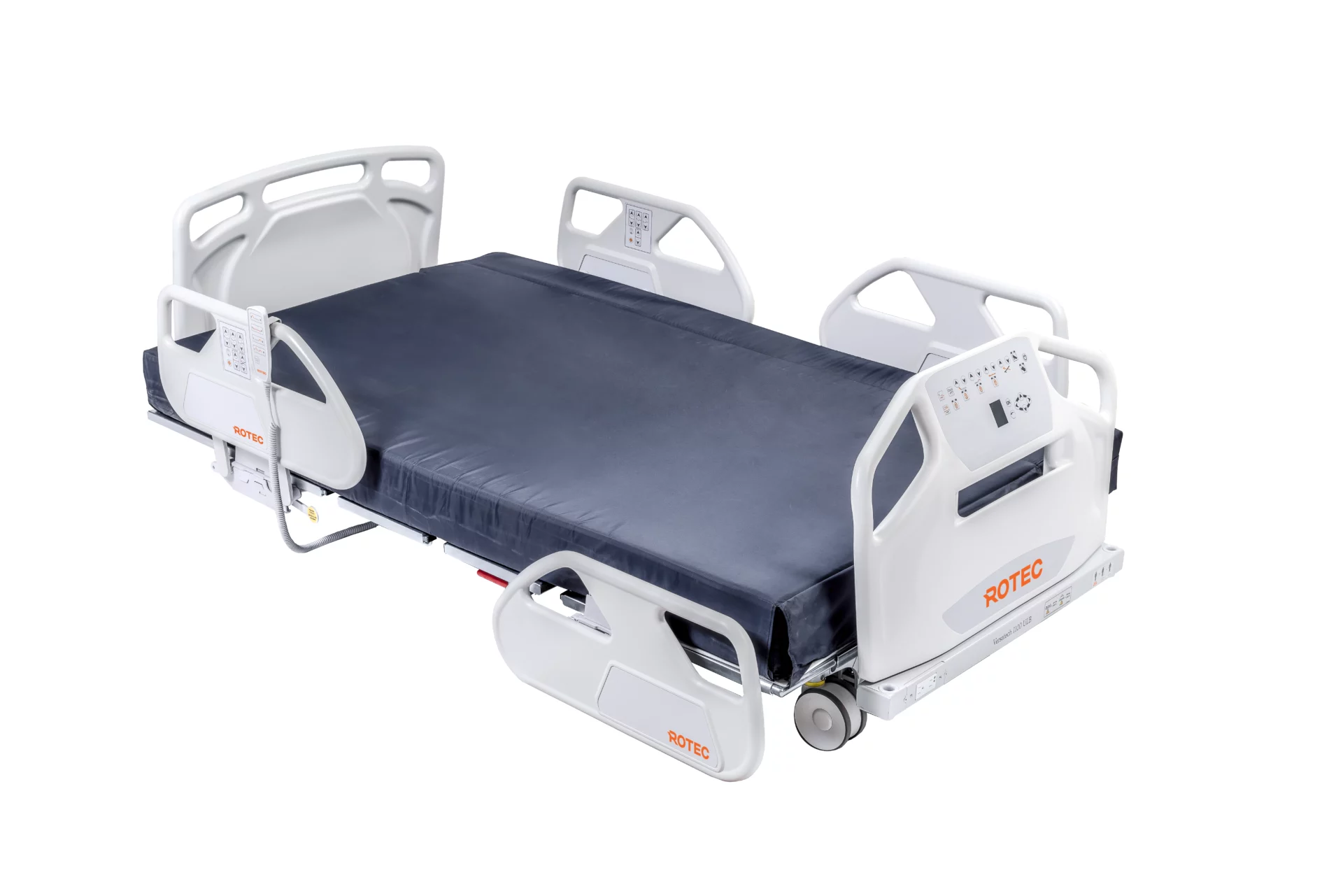
Ultra-Low Bed Height (21cm / 8")
Lowers close to floor level to help reduce fall-related injuries and improve confidence for patients entering and exiting the bed.
High Safe Working Load (500 kg)
Designed specifically for bariatric care, supporting patients up to 454 kg with exceptional structural stability and long-term durability.
Adjustable Width and Length
Expandable platform width from 89 cm to 119 cm and extendable length from 203 cm to 223 cm allows the bed to adapt to different patient requirements.
Integrated Scales with Bed Exit Detection
Built-in weighing system and three-zone bed exit notification help carers monitor patients safely while reducing unnecessary transfers.
Electric Profiling and Auto-Contour Controls
Smooth adjustment of backrest, leg rest, and positioning functions improves comfort, pressure care, and everyday clinical use.
Trendelenburg and CPR Functions
One-touch Trendelenburg adjustment with both electric and mechanical CPR functions supports emergency response and clinical flexibility.
VersaDrive Compatible
Optional powered drive assist system improves manoeuvrability for caregivers when transporting or repositioning the bed.
Antimicrobial, Easy-Clean Construction
Powder-coated frame and composite components support infection control and simplify ongoing maintenance.
Platform width
Adjustable from 89 cm to 97 cm to 104 cm to 119 cm (35” to 38” to 41” to 47”)
Overall width at 89 cm (35”)
101 cm (40”)
Overall width at 119 cm (47”)
132 cm (52”)
Platform length
203 cm to 213 cm to 223 cm (80” to 84” to 88”)
Overall length at 203 cm (80”)
237 cm (93 1/8”)
Overall length at 223 cm (88”)
257 cm (101 1/8”)
Minimum height
21 cm (8”)
Maximum height
81 cm (32”)
Load capacity
500 kg (1100 lb)
Backrest angle
70°
Legrest angle
32°
Trendelenburg position
-14° to +14°
Under bed clearance
14.9 cm (5 7/8”)
Bed weight
263 kg (580 lb)
Auxiliary outlet
120V 5A, 220V 2.5A
Drive wheel autonomy
~ 8 km (5 miles)